How do I know if I have a hidden slow leak in the first place?
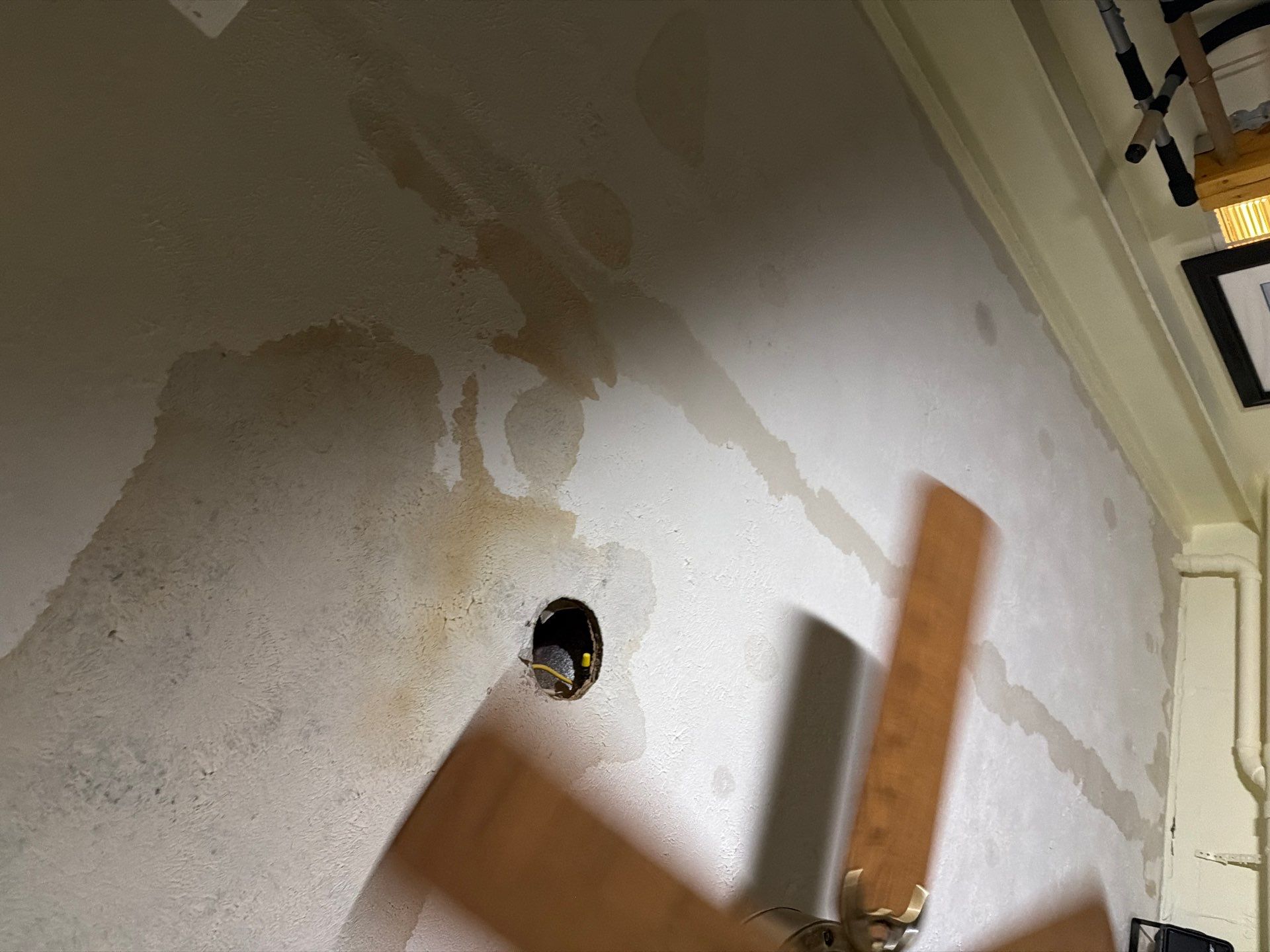
The earliest signals are sensory, not visible. You may notice a faint earthy or musty smell in a closet that backs up to a bathroom wall. Paint may look slightly bubbled along a baseboard, or a single floorboard in a hallway may feel softer than the rest. Your water bill creeping up by 10 or 15 dollars a month with no change in usage is another classic sign. Warm spots on a slab floor often point to a hot water line leaking under the foundation, while cold spots under carpet usually mean a cold supply line.
If you see any of these together, you are almost certainly past the early stage. A single symptom can be coincidence. Two or three in the same area of the home is a leak until proven otherwise. Our team uses thermal cameras and pin meters to confirm before we ever cut into a wall, and you can read more about how we approach signs of hidden water damage in your home in our detection guide.
Pay attention to your pets as well. Dogs and cats often sniff at baseboards or refuse to lie in a spot they used to favor, weeks before any human detectable odor develops. Condensation on the inside of a kitchen cabinet, rust stains around a supply line nut, or a toilet that occasionally runs without being flushed are all worth investigating the same day you notice them.
Where do slow leaks hide most often in Greensburg homes?
Behind dishwashers and refrigerators with ice makers, under master bathroom vanities, inside walls shared by back to back plumbing fixtures, and at the connection points of toilet supply lines. In older Greensburg neighborhoods with original copper plumbing, pinhole corrosion at elbow joints in the basement ceiling is extremely common. In newer subdivisions, we see more failures at push fit fittings and at washing machine hoses that were never replaced past their 5 year service life.
Attics and crawl spaces are blind spots most homeowners never check. A loose plumbing vent boot on the roof can drip onto attic insulation for an entire season before anything stains the ceiling below. Crawl space supply lines that sweat in summer humidity can soak floor joists until rot is visible from inside the home.
Water heaters deserve a section of their own. The tank itself rarely fails dramatically. Instead, the temperature and pressure relief valve will weep a few drops per hour into the drain pan, and if that pan is cracked or improperly routed, the water finds its way under adjacent flooring. Tankless units leak at their isolation valves and condensate lines. Anywhere a softener or filtration system has been added after the original build, the cut in fittings are worth a yearly visual check.
Will my homeowners insurance cover a slow leak?
This is where slow leaks get frustrating. Most policies cover sudden and accidental water damage, but exclude losses caused by long term seepage, typically defined as leaking for 14 days or more. A burst pipe is usually covered. A pinhole that has been dripping for four months is usually not. That said, the resulting mold or secondary damage may still be partially covered depending on your policy language.
We document everything photographically and provide a written scope, which helps your adjuster make a fair determination. For a deeper look at how claims work, see our overview of homeowners insurance and water damage.
What should I do right now if I suspect a hidden leak?
Shut off the water supply to the suspected fixture if you can isolate it. If the leak appears to be inside a wall with no obvious shutoff, close the main valve to the home. Move furniture and rugs away from the affected area, set up fans for surface airflow, and avoid cutting into walls yourself until an assessment is done. The cleaner the inspection area, the more accurately we can map the damage.
Then call us. The assessment is free, the conversation is honest, and if the problem is small enough to handle without restoration services, we will say so.
What does a professional leak assessment actually involve?
When you call Greensburg Water Restoration, we dispatch a certified technician, in most cases within 2 hours for active concerns. The inspection itself is free. We start with a visual walkthrough, then use a thermal imaging camera to identify temperature anomalies behind finished surfaces. Cool patches on a wall in a heated home almost always indicate moisture evaporation. From there, we confirm with a non invasive pin meter, and only cut a small inspection hole if the readings warrant it.
We map the affected area, document moisture content in each material, and identify the source. If the source is an active plumbing failure, you will need a licensed plumber to make the repair. We coordinate that handoff so drying can begin immediately after, and our process aligns with the IICRC water restoration standards that govern proper remediation.
A complete assessment also includes humidity readings in adjacent rooms, a check of the HVAC return path to see whether spores may have already been distributed, and photographs of every reading we take. You receive a copy of that documentation whether you hire us for the restoration work or not. It belongs to you and your insurance file.
How much damage can a leak this small really cause?
More than most people expect. A pinhole leak dripping at one drop per second wastes around 5 gallons per day. Over 60 days, that is 300 gallons soaking into framing, drywall, and insulation. Wood framing begins to lose structural strength once moisture content exceeds 20 percent for sustained periods, and mold colonies typically establish within 48 to 72 hours of materials staying wet.
The hidden cost is often the materials you cannot see. Cellulose insulation loses most of its R-value once saturated and does not recover even after drying. Subfloor adhesive breaks down, which causes squeaks and separation that show up months later as the floor is walked on. Drywall paper wicks moisture up to 18 inches above the actual wet point, which is why a small leak at the base of a wall often requires removal well above the visible damage line.
Can I prevent the next slow leak before it starts?
Yes, and most of the prevention is inexpensive. Replace rubber washing machine hoses with braided stainless steel every 5 years. Swap toilet supply lines on the same schedule. Install simple battery powered water sensors under each sink, behind the refrigerator, near the water heater, and in the laundry area. They cost around 15 to 25 dollars each and will scream loud enough to wake you up at night.
If you travel often or own a second home in Greensburg, a whole house automatic shutoff valve is worth the investment. These devices monitor flow patterns and close the main valve when they detect continuous flow that does not match normal household use. Annual visual inspections of every accessible supply connection, plus a yearly look in the attic and crawl space, will catch the vast majority of slow leaks before they become restoration projects.