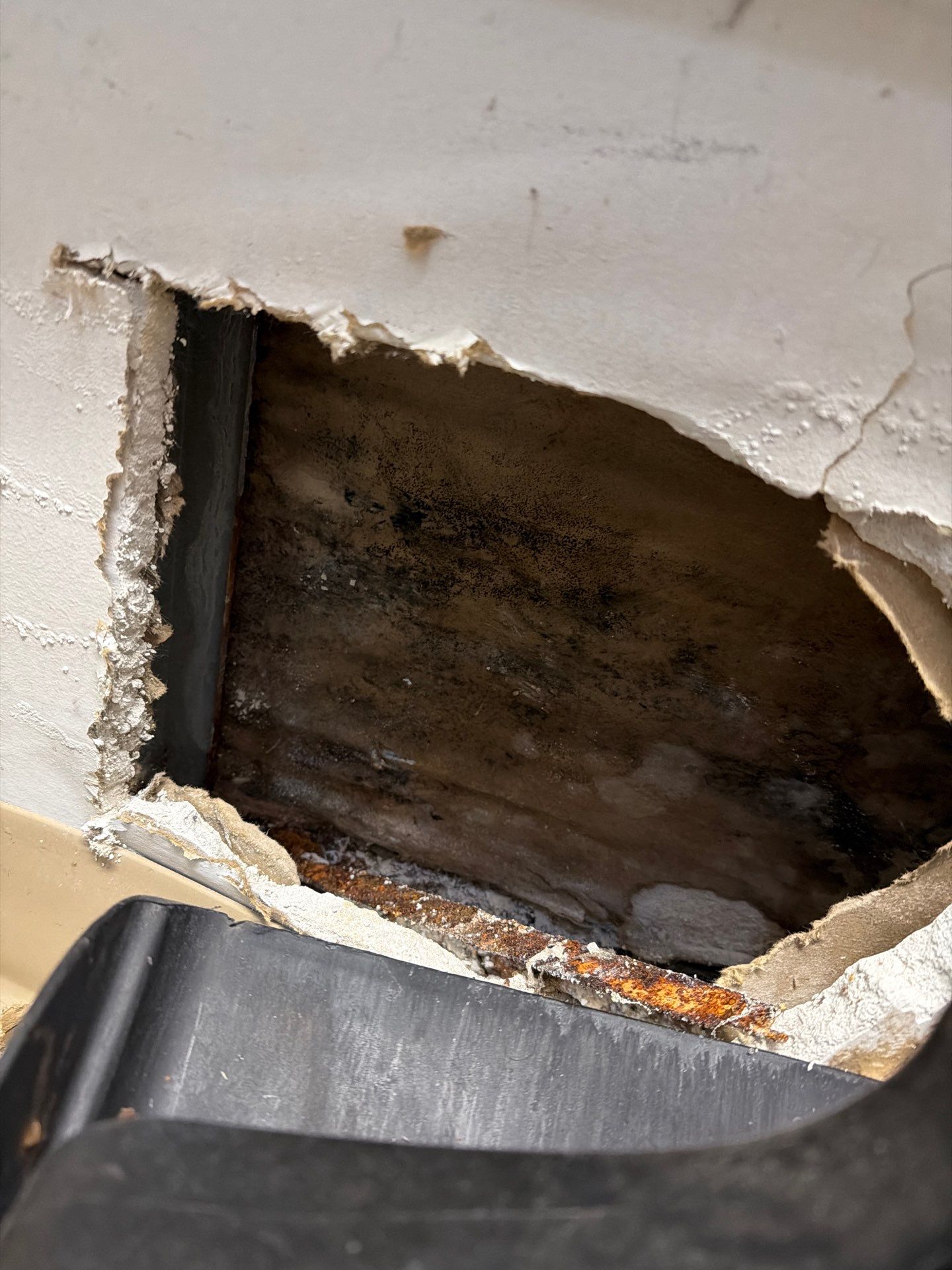
The 7 Things You Need to Know About Mold Air Testing
Here is the framework we use on every Greensburg project that involves air sampling.
- Pre test sets the baseline
- Post test proves clearance
- Outdoor control is mandatory
- Spore types matter more than total counts
- Sampling location changes the result
- Lab turnaround affects your timeline
- Clearance criteria must be defined upfront
1. Pre-Test Sets the Baseline
Before we cut a single piece of drywall, we capture air samples. This tells us what spore load exists right now.
Pre testing typically captures:
- Total spore count per cubic meter
- Genus identification (Aspergillus, Stachybotrys, Cladosporium, Penicillium)
- Hyphal fragments and structural debris
- Background pollen and skin cell load
- Comparison samples from unaffected rooms
Without a pre test, you have no proof the remediation actually changed anything.
The baseline also protects everyone legally. If a tenant, buyer, or insurance carrier later questions whether mold was present, you have lab stamped evidence from day one. Greensburg Water Restoration stores every pre test report tied to the project file so it can be pulled years later if needed.
2. Post-Test Proves Clearance
After containment, HEPA filtration, and antimicrobial application, we wait. Air needs to settle. Then we sample again.
Post remediation samples should show:
- Indoor spore counts at or below outdoor levels
- No water damage indicator species (Stachybotrys, Chaetomium)
- Reduced or eliminated Aspergillus/Penicillium groupings
- Clean structural debris counts
- Consistent results across multiple rooms
If any of these fail, the containment goes back up and we re clean. No shortcuts.
Settling time matters here. We typically let the space rest for 24 hours after final cleaning before the cassette runs. Sampling too soon catches airborne debris from the cleanup itself and produces a false positive.
3. Outdoor Control Is Mandatory
Every test needs an outdoor reference sample taken the same day. Why? Mold exists everywhere outside. The question is whether your indoor air looks like outdoor air or worse.
What we compare:
- Indoor total counts vs outdoor total counts
- Indoor species mix vs outdoor species mix
- Presence of indoor only indicators
- Ratio shifts between affected and unaffected rooms
A Greensburg home reading 800 spores/m³ might be perfect in spring and alarming in winter. Context decides.
Weather on sample day also shifts the math. After heavy rain, outdoor counts can drop sharply because spores get washed out of the air. On hot dry days with wind, outdoor counts spike. Good technicians log temperature, humidity, and recent weather so the lab can interpret the numbers properly.
4. Spore Types Matter More Than Total Counts
A total count of 1,500 looks scary until you learn it is all outdoor tracked Cladosporium. A count of 200 looks fine until you see it is pure Stachybotrys.
The species we flag fastest:
- Stachybotrys chartarum indicates prolonged water saturation
- Chaetomium indicates chronic dampness in cellulose
- Aspergillus/Penicillium at elevated indoor ratios suggest active growth
- Fusarium points to ongoing wet conditions
- Ulocladium signals serious moisture history
If you want to understand why these species show up, our piece on how fast mold grows after water damage explains the 48 hour window that creates them.
5. Sampling Location Changes the Result
Where the cassette sits during sampling matters as much as what it captures.
Standard placement rules:
- 3 to 5 feet off the floor (breathing zone)
- Away from supply registers and open windows
- Centered in the room, not near walls
- HVAC running normally during the sample
- Doors closed to isolate the test zone
A sample taken next to an open patio door tells you about your patio. Not your remediation.
We also document every cassette location with photos and a floor plan sketch. If the post test happens weeks later with a different technician, the second sample lands in exactly the same spot. That apples to apples comparison is what makes the data defensible.
6. Lab Turnaround Affects Your Timeline
You cannot rebuild until you have clearance results. Plan accordingly.
Typical turnaround in our Greensburg market:
- Standard lab processing: 3 to 5 business days
- Rush processing: 24 to 48 hours (added cost)
- Same day analysis: rare, premium pricing
- Re test if first fails: full cycle restart
- Insurance documentation: add 1 to 2 days
We schedule sampling on a Monday or Tuesday whenever possible. That gives the lab room to deliver results before the weekend stalls your rebuild.
7. Clearance Criteria Must Be Defined Upfront
This is where projects go sideways. If nobody writes down what "passing" means before work starts, you will argue about it after.
Clearance protocols should specify:
- Required spore count thresholds
- Acceptable species presence
- Number of sample locations
- Visual inspection standards
- Moisture meter readings on rebuilt surfaces
Greensburg Water Restoration provides a written protocol before any S520 project begins in Greensburg. You see the rules, the lab sees the rules, and your insurance adjuster sees the rules.
What Pre vs Post Testing Costs
Pricing varies by sample count and lab speed, but here are realistic Greensburg ranges:
- Single room pre test with outdoor control: $300 to $500
- Whole home pre test (4 to 6 samples): $600 to $1,000
- Post remediation clearance test: $400 to $800
- Rush lab processing surcharge: $150 to $300
- Re test if clearance fails: full repeat cost
Many insurance policies cover testing when it is tied to a documented water loss. Our guide on filing a water damage insurance claim walks through how to package testing into your claim.
Red Flags in a Mold Testing Report
When you get the lab results back, watch for:
- Indoor counts more than double outdoor counts
- Stachybotrys present indoors but absent outdoors
- Single species dominance (suggests active colony)
- Hyphal fragment counts above 50/m³
- Inconsistent results between adjacent rooms
Any of these means the work is not done. That is not bad news, it is honest data. Better to learn it now than after the drywall goes back up.
If you call Greensburg Water Restoration after a failed clearance, a crew can be dispatched within 2 hours in most cases to reset containment and start the re clean. Testing is only valuable when somebody acts on the results, and we treat a failed report as the start of the next phase, not an argument.
When You Should Push for Air Testing
Not every job needs lab work. These situations do:
- Visible mold larger than 10 square feet
- Water losses sitting more than 72 hours
- Recurring respiratory symptoms in occupants
- HVAC contamination suspected
- Real estate transactions requiring documentation
- Post remediation verification for warranty
If your situation started with a leak, our overview of water damage restoration shows how moisture mapping connects to mold prevention before testing ever becomes necessary.
Who Should Actually Run the Test
Independence matters. The same crew tearing out drywall should not be the one grading their own homework.
Best practice splits the roles:
- Remediation contractor handles containment and cleaning
- Independent industrial hygienist collects clearance samples
- Accredited third party lab analyzes the cassettes
- Homeowner or adjuster receives results directly
- Contractor only sees results after the lab delivers them
When Greensburg Water Restoration runs a Greensburg project, we welcome third party clearance because it removes any doubt about the outcome. If a crew pushes back on independent testing, treat that as a warning sign.